

Brought to you by:
McGill Univ. Libraries and the generosity of Dr. Richard L. Tomlinson
McGill Univ. Libraries and the generosity of Dr. Richard L. Tomlinson
| |
Brought to you by: McGill Univ. Libraries and the generosity of Dr. Richard L. Tomlinson |
|||

|
|
|
| Leukemia
Research Volume 29, Issue 6, June 2005, Pages 693-700 |
| ||||
|
| ||||

Engineering 3-alkyltriazenes to block bcr-abl kinase: a novel strategy for the therapy of advanced bcr-abl expressing leukemias
Athanasia Katsoulasa,
Zakaria Rachida,
Fouad Brahimia,
James McNameeb
and Bertrand J. Jean-Claudea,
 ,
, 
Abstract
Recently, within the framework of a new strategy termed “combi-targeting,” we designed ZRCM5 to contain a 2-phenylaminopyrimidopyridine moiety targeted to bcr-abl kinase and a triazene tail capable of generating a methyldiazonium species upon hydrolysis. The ability of ZRCM5 to block tyrosine kinase activity was tested in a short 10 min exposure ELISA involving isolated bcr-abl kinase and Western blotting assays. The results showed that: (a) ZRCM5 was hydrolyzed with a half-life of 27 min in cell culture media, (b) it blocked bcr-abl autophosphorylation in promyeloblastic leukemia K562 cells in a dose-dependent manner (IC50 = 14.01 μM) and (c) it induced dose-dependent levels of DNA strand breaks. In contrast, temozolomide (TEM), a clinical DNA damaging triazene capable of generating, like ZRCM5, a methyldiazonium species, could neither block bcr-abl tyrosine kinase activity in isolated enzyme nor in whole cell autophosphorylation assays. In cells expressing varied levels of bcr-abl, ZRCM5 was consistently more potent than TEM. The significant potency of ZRCM5 against the leukemia cells was attributed to its ability to simultaneously to block bcr-abl and related DNA repair activity while inducing significant DNA lesions in bcr-abl expressing leukemia cells. Further studies are ongoing to increase the affinity of ZRCM5 with the purpose of further enhancing its potency in bcr-abl expressing cells.
Keywords: CML; Temozolomide; Imatinib; DNA damage
Article Outline
1. Introduction
Chemotherapeutic agents of the triazene class have been used in the clinical management of many tumours including brain, leukemias and melanomas [1] and [2]. Their mechanism of action is based on the generation of an alkyldiazonium species that damages DNA at the O6 and N7 positions of guanine [3], [4] and [5]. Dialkyltriazenes like dacarbazine 1 (Scheme 1), a drug used in the clinical management of non-Hodgkin's disease, requires metabolic oxidation to generate hydroxymethyltriazene 2 that is further hydrolyzed to monoalkyltriazene 3. The non-conjugated tautomer of the latter (4) heterolyzes to aromatic amine 5 and the cytotoxic methyldiazonium species 6 (Scheme 1). More recently, TEM a cyclic triazene was designed to generate the cytotoxic monoalkyltriazene species 3 upon hydrolysis, without any requirement for metabolic oxidation [1], [2] and [6].
Display Full Size version of this image (23K) Scheme 1. Metabolic activation of dacarbazine and hydrolysis of TEM.
Recently, within the framework of a novel tumour targeting concept, our laboratory demonstrated that the potency of triazenes could be enhanced by appending them to inhibitors of the epidermal growth factor receptor (EGFR) tyrosine kinase of the quinazoline class [7], [8], [9] and [10]. We surmise that this may ultimately confer them new indications in refractory tumours expressing this oncogene. Here we report the first subcellular pharmacology study on a compound with mixed bcr-abl/DNA targeting properties.
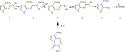
Bcr-abl is a constitutively activated tyrosine kinase that is known to be the cause of chronic myelogenous leukemia (CML) [11] and [12], a malignancy of hematopoietic stem cells. Blockade of the tyrosine kinase activity of bcr-abl with STI571 (Gleevec), an inhibitor of the 2-phenylaminopyrimidine class induces significant antitumour activity in vivo and the drug is now approved in the clinical therapy of CML [13]. More importantly, recent studies demonstrated that STI571 sensitized bcr-abl expressing cells to cytotoxic DNA damaging agents by depleting the anti-apoptotic properties associated with bcr-abl [14]. Moreover, it has been shown that bcr-abl induces resistance to cytotoxic drugs by upregulating DNA repair mechanisms. As an example, studies have shown that bcr-abl positive cells express elevated levels of Rad51, a major player in homologous recombination repair (HRR) [15] and [16]. More recently, Canitrot et al. [17] showed that bcr-abl regulates nucleotide excision repair NER. Also studies have shown that bcr-abl may be involved in nonhomologous end-joining (NHEJ) repair pathway [16] and [18]. These results lend support to strategies like ours that seek to combine a DNA damaging agent with bcr-abl inhibition into a single molecule in order to induce the enhanced potency in CML cells. Here we report on the antiproliferative effects of ZRCM5, the first ever reported mixed DNA/bcr-abl targeting triazene. ZRCM5 is a hydroxymethyltriazene that does not require metabolic oxidation to generate the cytotoxic species, since following loss of formaldehyde it is designed to lead to the monoalkyltriazene 2 (Scheme 2), a hydrolabile species that generates the methyldiazonium upon hydrolysis.
Display Full Size version of this image (26K) Scheme 2.
2.1. Drug treatment
Temozolomide was provided by Shering-Plough Inc. (Kenilworth, NJ, USA). Detailed synthesis and rational design of ZRCM5 were described elsewhere [19]. In all assays, drug was dissolved in DMSO and subsequently diluted in RPMI-1640 containing 10% fetal bovine serum (Wisent Inc., St-Bruno, Canada) immediately before the treatment of cell cultures. In all assays, the concentration of DMSO never exceeded 0.2% (v/v).
2.2. Cell culture
K562 (American Type Culture Collection Manassas, VA), KU812 and U937 cells (generous gifts from Dr. Carlo Gambacorti-Passerini, Division of Experimental Oncology D and Medical Oncology C, Tumour National Institute, Italy) were maintained in RPMI-1640 supplemented with 10% FBS and antibiotics as described previously [7] and [8]. Mo7e (generous gift from Dr. Brian J. Druker, Division of Hematology and Medical Oncology, Oregon Health Sciences, USA) were grown in RPMI-1640 supplemented with 10% FBS, 2% (v/v) l-glutamine, 10 ng/ml granulocyte-macrophage colony stimulating factor (GM-CSF) and antibiotic. All cells were maintained in an atmosphere of 5% CO2.
2.3. Degradation
The half-life of ZRCM5 was studied by UV-spectrophotometer. The compound was dissolved in minimum volume of DMSO and was further diluted in phosphate buffered saline solution (PBS), and absorbances were read at 315 nm in a UV cell maintained at 37 °C with a circulating water bath. The half-life was estimated by a one-phase exponential decay curve-fit method using the GraphPad software package (GraphPad software Inc., San Diego, CA, USA).
2.4. Flow cytometry
Cells (KU812) were grown in 6-well plates until confluence and then incubated with STI571, ZRCM5 and temozolomide for 24 h. Thereafter, they were collected by centrifugation, washed twice with PBS, fixed with ethanol (70%) and propidium iodide was added. Analyzes were performed by flow cytometry using UV filter of 424 ± 44 nm.
2.5. Bcr-abl autophosphorylation assay
Inhibition of receptor autophosphorylation in viable cells was determined by anti-phosphotyrosine Western blots. Cells were plated at a concentration of 2 × 10⁶ cells per well and incubated with the compounds for 2 h. Thereafter, they were washed with PBS and re-suspended in cold lysis buffer [50 mM Tris–HCl pH 7.5; 150 mM NaCl; 1% Nonidet P-40, 1 mM EDTA; 5 mM NaF; 1 mM Na3VO4; protease inhibitor tablet (Roche Biochemicals, Laval, Canada)]. The lysates were kept on ice for 30 min and collected by centrifugation at 10,000 rpm for 20 min at 4 °C. Protein concentrations were determined against a standardized control using the Bio-Rad protein assay kit (Bio-Rad Laboratories, Hercules, CA). Equal amounts of protein from each cell lysate were added to an 8% SDS-polyacrylamide gel electrophoresis and transferred to a polyvinylidene difluoride membrane (Millipore, Bedford, MA). Non-specific binding on the membrane was minimized with a blocking buffer containing nonfat dry milk (3%) in PBS. The membrane was blotted for 1 h with anti-phosphotyrosine antibody 4G10 (Upstate Biotechnology, NY) or anti-abl antibodies (Upstate Biotechnology, NY). It was subsequently incubated with HRP-goat anti-mouse antibody (Bio-Rad laboratories) or with HRP-goat anti-rabbit (Upstate Biotechnology, NY) and the bands visualized with an enhanced chemiluminescence system (Amersham Pharmacia Biotech, Buckinghamshire, UK). Band intensities were measured using the SynGene GeneTools software package.
2.6. MTT assay
The cytotoxic effects of our compounds were evaluated using the 3-(4,5-dimethylthiazo-2-yl)-2,5-diphenyltetrazolium bromide (MTT) assay [20] with minor modification. For synergy between STI571 and TEM, the drugs were combined in a molar IC50 ratio of 1:1560 [STI571/TEM]. Briefly, cells were grown in 12-well plates and then exposed to compounds for 96 h. MTT (50 μl) of (5 mg/ml in sterile PBS) was added to 1 ml of media and the plates were incubated for 2–3 h at 37 °C. The resulting colored residue was dissolved in DMSO and optical density was read for each well at 570 nm using a Bio-Rad microplate reader (model 2550). Each point represents the average of at least two independent experiments run in duplicate.
2.7. Alkaline comet assay for quantitation of DNA damage
The alkaline comet assay was performed as previously described [7]. The cells were exposed to drugs for 30 min and resuspended in PBS. Cell suspensions were diluted to approximately 106 cells, and mixed with agarose (1%) in PBS at 37 °C in a 1:10 dilution. The gels were cast on Gelbond strips (Mandel Scientific, Guelph, Canada) using gel casting chambers and then immediately placed into a lysis buffer [2.5 M NaCl, 0.1 M tetra-sodium EDTA, 10 mM Tris-base and 1% (v/v) Triton X-100, pH 10.0]. After being kept on ice for 30 min, the gels were gently rinsed with distilled water and immersed in a second lysis buffer (2.5 M NaCl, 0.1 M tetrasodium EDTA, 10 mM Tris-base) containing1 mg/ml proteinase K for 60 min at 37 °C. Thereafter, the gels were rinsed with distilled water, incubated in alkaline electrophoresis buffer for 30 min at 37 °C, and electrophoresed at 19 V for 20 min. After rinsing with distilled water, they were placed in 1 M ammonium acetate for 30 min. Thereafter, they were soaked in 100% ethanol for 2 h, dried overnight, and stained with SYBR Gold (1/10,000 dilution of stock supplied from Molecular Probes, Eugene, OR) for 20 min. Comets were visualized at 330× magnification and DNA damage was quantitated using the Tail Moment parameter (i.e., the distance between the barycenter of the head and the tail of the comet multiplied by the percentage of DNA within the tail of the comet). A minimum of 50 cell comets were analyzed for each sample, using ALKOMET version 3.1 image analysis software.
3.1. Degradation
ZRCM5 was allowed to degrade in serum-containing cell culture medium and its disappearance monitored by UV spectrophotometry. An exponential decay curve was observed giving a calculated half-life of 27 min (Fig. 1).
Display Full Size version of this image (10K) Fig. 1. Half-life of ZRCM5 in phosphate buffered saline solution (PBS) using UV-spectrophotometry.
3.2. Bcr-abl inhibitory activities
We have already reported that in a short exposure ELISA, ZRCM5 was 5-fold less potent than STI571 [19]. The lesser affinity of ZRCM5 is believed to be due to the orientation of the polar hydroxymethyl in the partially hydrophobic pocket of the active site of the abl kinase. While the reported inhibition of bcr-abl in an ELISA is indicative of the affinity of ZRCM5 for abl, the determination of its ability to block bcr-abl in whole cell remained the ultimate test. Thus, we compared the ability of the two drugs (ZRCM5, STI571) to block bcr-abl activation in K562 cells using a Western blotting assay (Fig. 2). The trend was comparable with that obtained in the ELISA [19]. ZRCM5 blocked bcr-abl autophosphorylation in a dose-dependent manner although its activity was found to be less potent than that of STI571 (Fig. 3). Nevertheless, the levels of activity were considered sufficient for this study that seeks to analyze the effects of mixed bcr-abl targeting molecules on leukemia cells. As shown in Fig. 2b, TEM did not induce any bcr-abl inhibitory activity in these cells.
Display Full Size version of this image (40K) Fig. 2. Inhibition of tyrosine phosphorylation of bcr-abl in K562 cells. Cells were incubated for 2 h in the presence of the indicated concentration of ZRCM5 (a) and temozolomide (b). Cells were lysed and equal amounts of lysate were analyzed by immunoblotting with antiphosphotyrosine or anti-abl antibodies.
Display Full Size version of this image (15K) Fig. 3. IC50 of inhibition of tyrosine phosphorylation of bcr-abl in K562 cells by ZRCM5. The scanned data from the antiphosphotyrosine immunoblot were used to calculate the IC50, defined as a 50% of reduction of the intensity of the bcr-abl phosphotyrosine band.
3.3. DNA damage
The translation of the alkylating activity of ZRCM5 into DNA damage in K562 cell line was tested using the single cell microelectrophoresis (comet) assay (Fig. 4). Both ZRCM5 and TEM, were found to induce a dose-dependent increase in DNA strand breaks in K562. These results conclusively demonstrated the feasibility of a molecule capable of not only blocking bcr-abl TK but also inducing DNA damage. This assay conclusively demonstrates the feasibility of a combi-molecule (ZRCM5) that may degrade to an alkylating species that damages DNA.
Display Full Size version of this image (14K) Fig. 4. Quantitation of DNA damage using the alkaline comet assay. DNA damage induced by ZRCM5 and Temozolomide in the K562 cell line. Tail moment was used as a parameter for the detection of DNA damage in K562 cells exposed to ZRCM5 and Temozolomide for 30 min. Each point represents the mean and S.E.M. of two independent experiments.
3.4. Flow cytometric analysis of apoptosis
To test the ability of ZRCM5 to induce apoptosis, we used a bcr-abl+ cell line KU812, that undergo dose-dependent increase in apoptosis in response to STI571 (Gleevec™). As shown in Fig. 5, apoptosis was seen in STI571 treated cells at all concentrations, however a detectable sub-G1 peak is seen for ZRCM5-treated cells only at the highest concentration (100 μM). No discrete sub-G1 peak was observed for TEM at any of the administered doses. Interestingly while the number of apoptotic cells increased after 48 h in cells exposed to STI571, those exposed to ZRCM5 died at the highest doses and specifically arrested in G1 at the lowest concentrations. At this time point, cells exposed to TEM were mostly arrested in S-G2/M with some G1 arrest at the highest dose. These results are indicative of a marked difference in the mechanism of action of ZRCM5 when compared with TEM and STI571.
Display Full Size version of this image (133K) Fig. 5. Cell cycle analysis following drug treatment in KU812 cells (bcr-abl+). Cells were treated with STI571 (a), ZRCM5 (b) and temozolomide (c) or untreated controls. After 24 or 48 h cell cycle analysis was performed by iodide staining and flow cytometry as described in Section 2.
3.5. Cytotoxicity assay
To test whether the binary bcr-abl/DNA targeting properties of ZRCM5 would translate into increased potency in bcr-abl expressing cells, we compared its effects with those of TEM against K562, KU812, U937 and an isogenic pair of human megaryocytic cell lines (Mo7e, Mo7/p210) (Table 1). TEM did not show any significant activity in this cell panel (Table 1, Fig. 6b). However, ZRCM5 was significantly more potent in the bcr-abl expressing cells with activities up to 50-fold stronger than that of TEM (Fig. 6a). In the isogenic cells, TEM significantly and selectively killed the wild-type Mo7e cells. Likewise, ZRCM5 induced superior cytotoxic activity in the wild-type. However, it was almost 74-fold more potent than temozolomide in the bcr-abl transfected cell line, indicating that it may be capable of depleting the cytoprotective role of bcr-abl in the transfected cells. In order to test the hypothesis that depletion of bcr-abl inhibitory activity may potentiate the action of triazenes, TEM was combined with STI571 at their IC50 molar ratios. Indeed significant potentiation was observed in a sub nanomolar concentration of STI571 (Fig. 7).
MTT cytotoxic assay in K562, KU812, U937, Mo7/p210 and Mo7e following STI571, TEM or ZRCM5 treatment
a IC50 values are the mean of two independent experiments.
Cell lines IC50 (μM)a
bcr-abl
TEM
ZRCM5
STI571
K562 + >100 3.15 0.11 KU812 + >200 2.30 0.10 U937 − >200 20.77 17.40 Mo7/p210 + >100 1.97 0.07 Mo7e − 5.42 0.27 15.09
Display Full Size version of this image (52K) Fig. 6. Cytotoxic effects of ZRCM5, STI571 and temozolomide in bcr-abl positive K562 (a), Mo7/p210 (b) and bcr-abl negative U937 (c) cells. Cells were exposed to each drug for 96 h. Cell growth was measured using the MTT assay. Each point represents the mean and S.E.M. of two independent experiments in triplicate.
Display Full Size version of this image (16K) Fig. 7. Cytotoxic effects of temozolomide or STI571 alone in comparison with the 1:1560 molar ratio of TEM/STI571 in K562 cells. Cells were exposed to each drug for 96 h. Cell growth was measured using the MTT assay. Each point represents the mean and S.E.M. of two independent experiments in triplicate.
4. Discussion
3-Methyl-1,2,3-triazenes are strong alkylating agents that methylate DNA at the 6- and 7-positions of guanine and the 3-position of adenine. Although 7-methylguanine is the most abundant adduct induced by these drugs, their cytotoxic activity is imputed to the O6-methylguanine adduct that accounts for only 5–6% of total DNA adducts [21]. It is believed that the latter lesions being pro-mutagenic may induce lethal mutations in tumour cells. Studies in an isogenic pair of cell lines (Mo7e, Mo7/p210) showed TEM to be 27-fold less potent in the bcr-abl transfectant when compared with its parental counterpart. Thus, bcr-abl may play a cytoprotective role against TEM in the transfectant and perhaps in the other bcr-abl+ cell lines in the panel. A similar differential response profile was seen when this pair of isogenic cells was exposed to ZRCM5. However, its 70-fold superior potency indicates that its ability to block bcr-abl kinase may play a role in its antitumour property.
Although the binary bcr-abl–DNA targeting properties of ZRCM5 are clearly demonstrated in this study, the contribution of these two mechanisms to its superior potency must be carefully addressed. ZRCM5 blocks 50% of bcr-abl autophosphorylation at 14 μM, a concentration that is 5-fold higher than its IC50 for cell-killing in bcr-abl expressing cells. Although the IC50 concentration was rather high, blockade of bcr-abl inhibition may only partially contribute to the mechanism of potency of the drug. Indeed when STI571 was combined with TEM with 1:1560 molar ratio significant synergistic killing of K562 leukemia cells was observed. It is known that N7-guanine DNA lesions induced by methylating agents are repaired by the base excision repair (BER) pathway, a mechanism by which specific DNA glycosylases remove the damaged base with subsequent DNA polymerase β-mediated DNA synthesis step [22]. Recent studies have shown that in the absence of an efficient BER pathway, the formation of BER intermediates can trigger HRR, a mechanism that depends on bcr-abl activation [23]. Thus, sensitization of these cells to the DNA damage induced by TEM or ZRCM5 through inhibition of bcr-abl may be due to inefficient BER pathway and activation of HRR in these cells.
Apoptosis in our KU812 cell line was induced by ZRCM5 only at highest concentration. This indicates that its tyrosine kinase inhibitory activity may not be strong enough to alleviate the anti-apoptotic properties of bcr-abl. It should be remembered that Aloyz et al. [24] reported strong induction of apoptosis when STI571 was combined with chlorambucil in chronic lymphocytic leukemia cells (CLL) expressing c-abl. These results lend support to the requirement of strong bcr-abl inhibitory activity for the effective potentiation of DNA lesions.
The weak bcr-abl inhibitory potency of ZRCM5 when compared with that of STI571 may also be due to the instability of the molecule. Following its degradation in serum, ZRCM5 generates a stable aminopyridine (structure 3, Scheme 2) that was found to be a poor inhibitor of bcr-abl tyrosine kinase [19]. Thus, the potency of this mixed targeting compound may be enhanced by ameliorating its stability and designing it to be hydrolyzed to a more potent inhibitor of bcr-abl.
It is now well known that clinical responses to STI571 in chronic phase have
been durable, however remissions observed in blast crisis patients have lasted
only 2–6 months despite continued drug treatment [25],
[26]
and [27].
Therefore, more aggressive therapies are required for patients in blast crisis
[14]
and [28].
Thus, the synthesis of compounds with mixed bcr-abl/DNA targeting properties may
well represent a new single agent alternative to STI571 or a new type of agent
to be used in combination with STI571. Further studies are ongoing in our
laboratory to demonstrate the feasibility of this principle in vivo.
References
[1] S.M. O’Reilly, E.S. Newlands, M.G. Glaser, M. Brampton, J.M. Rice-Edwards and R.D. Illingworth et al., Temozolomide: a new oral cytotoxic chemotherapeutic agent with promising activity against primary brain tumours, Eur J Cancer 29A (1993), pp. 940–942. Abstract | PDF (1325 K) | View Record in Scopus | Cited By in Scopus (153)
[2] N.M. Bleehen, E.S. Newlands, S.M. Lee, N. Thatcher, P. Selby and A.H. Cavert et al., Cancer research campaign phase II trial of temozolomide in metastatic melanoma, J Clin Oncol 13 (1995), pp. 910–913. View Record in Scopus | Cited By in Scopus (172)
[3] G. Graziani, I. Faraoni, U. Grohmann, R. Bianchi, L. Binaglia and G.P. Margison et al., O6-alkylguanine-DNA alkyltransferase attenuates triazene-induced cytotoxicity and tumor cell immunogenicity in murine L1210 leukemia, Cancer Res 55 (1995), pp. 6231–6236. View Record in Scopus | Cited By in Scopus (20)
[4] M.B. Smith, B.F. Schmidt, G. Czerwinski, L.A. Taneyhill, E.J. Snyder and A.M. Kline et al., Specificity of DNA alkylation by 1-(2-chloroethyl)-3-alkyl-3-acyltriazenes depends on the structure of the acyl group: kinetic and product studies, Chem Res Toxicol 9 (1996), pp. 466–475.
[5] P.D. Lawley and D.H. Phillips, DNA adducts from chemotherapeutic agents, Mutat Res 355 (1996), pp. 13–40. SummaryPlus | Full Text + Links | PDF (2824 K) | View Record in Scopus | Cited By in Scopus (79)
[6] E.S. Newlands, M.F.G. Stevens, S.R. Wedge, R.T. Wheelhouse and C. Brock, Temozolomide: a review of its discovery, chemical properties, pre-clinical development and clinical trials, Cancer Treat Rev 23 (1997), pp. 35–61. SummaryPlus | Full Text + Links | PDF (6185 K) | View Record in Scopus | Cited By in Scopus (201)
[7] S. Matheson, J. McNamee and B.J. Jean-Claude, Design of a chimeric 3-methyl-1,2,3-triazene with mixed receptor tyrosine kinase and DNA damaging properties: a novel tumour targeting strategy, J Pharmacol Exp Ther 296 (2001), pp. 832–840. View Record in Scopus | Cited By in Scopus (29)
[8] F. Brahimi, S. Matheson, J. McNamee, A. Tari and B.J. Jean-Claude, Inhibition of epidermal growth factor receptor-mediated signalling by “combi-triazene” BJ2000, a new probe for the combi-targeting postulates, J Pharmcol Exp Ther 303 (2002), pp. 238–246. Full Text via CrossRef | View Record in Scopus | Cited By in Scopus (22)
[9] S.L. Matheson, J. McNamee and B.J. Jean-Claude, Differential responses of EGFR−/−AGT-expressing cells to the “combi-triazene” SMA41, Cancer Chemother Pharmacol 51 (2003), pp. 11–20. Full Text via CrossRef | View Record in Scopus | Cited By in Scopus (19)
[10] Q. Qiyu, F. Dudouit, S.L. Matheson, F. Brahimi, R. Banerjee and J.P. McNamee et al., The combi-targeting concept: a novel 3,3-disubstituted nitrosourea with EGFR tyrosine kinase inhibitory properties, Cancer Chemother Pharmacol 51 (2003), pp. 1–10.
[11] M.W. Deininger, S.A.D. Vieira, Y. Parada, L. Banerji, E.W.-F. Lam and G. Peters et al., Direct relation between bcr-abl tyrosine kinase activity and cyclin D2 expression in lymphoblasts, Cancer Res 61 (2001), pp. 8005–8013. View Record in Scopus | Cited By in Scopus (27)
[12] D. Wisniewski, C.L. Lambeck, C. Liu, A. Strife, D.R. Veach and B. Nagar et al., Characterization of potent inhibitors of the bcr-abl and the c-Kit receptor tyrosine kinases, Cancer Res 62 (2002), pp. 4244–4255. View Record in Scopus | Cited By in Scopus (91)
[13] M.J. Mauro, M. O’Dwyer, M.C. Heinrich and B.J. Druker, STI571: a paradigm of new agents for cancer therapeutics, J Clin Oncol 20 (2002), pp. 325–334. Full Text via CrossRef | View Record in Scopus | Cited By in Scopus (128)
[14] Y. Kano, M. Akutsu, S. Tsunoda, H. Mano, Y. Sato and Y. Honma et al., In vitro cytotoxic effects of a tyrosine kinase inhibitor STI571 in combination with commonly used antileukemic agents, Blood 97 (2001), pp. 1999–2007. Full Text via CrossRef | View Record in Scopus | Cited By in Scopus (165)
[15] F. Daboussi, A. Dumay, F. Delacote and B.S. Lopez, DNA double-strand break repair signalling: the case of RAD51 post-translational regulation, Cell Signal 14 (2004), pp. 969–975.
[16] T. Skorski, Bcr/abl regulates response to DNA damage: the role in resistance to genotoxic treatment and in genomic instability, Oncogene 21 (2002), pp. 8591–8604. Full Text via CrossRef | View Record in Scopus | Cited By in Scopus (42)
[17] Y. Canitrot, R. Falinski, T. Louat, G. Laurent, c. Cazaux and J.S. Hoffman et al., p210 bcr/abl kinase regulates nucleotide excision repair (NER) and resistance to UV radiation, Blood 102 (2003), pp. 2632–2637. Full Text via CrossRef
[18] S.J. DiBiase, Z.C. Zeng, R. Chen, T. Hyslop, W.J. Curran Jr. and G. Iliakis, DNA-dependent protein kinase stimulates an independently active, nonhomologous, end-joining apparatus, Cancer Res 60 (2000), pp. 1245–1253.
[19] Z. Rachid, A. Katsoulas, F. Brahimi and B.J. Jean-Claude, Synthesis of pyrimidinopyridine-triazene conjugates targeted to the bcr-abl oncogene, Bioorg Med Chem Lett (2003), pp. 3297–3300. SummaryPlus | Full Text + Links | PDF (168 K) | View Record in Scopus | Cited By in Scopus (2)
[20] D. Vistica, P. Skehan, D. Scudiero, A. Monks, J.D. Pittam and M.R. Boyd, Tetrazolium-based assays for cellular viability: a critical examination of parameters affecting formazan production, Cancer Res 15 (1991), pp. 2515–2520. View Record in Scopus | Cited By in Scopus (193)
[21] M. Bignami, M. O’Driscoll, G. Aquilina and P. Karran, Unmasking a killer: DNA O6-methylguanine and the cytotoxicity of methylating agents, Mutat Res 462 (2000), pp. 71–82. SummaryPlus | Full Text + Links | PDF (228 K) | View Record in Scopus | Cited By in Scopus (71)
[22] S.H. Wilson, Mammalian base excision repair and DNA polymerase, Mutat Res 407 (1998), pp. 203–215. SummaryPlus | Full Text + Links | PDF (3606 K) | View Record in Scopus | Cited By in Scopus (179)
[23] R.W. Sobol, M. Kartalou, K.H. Almeida, D.F. Joyce, B.P. Engelward and J.K. Horton et al., Base excision repair intermediates induce p53-independent cytotoxic and genotoxic responses, J Biol Chem 278 (2003), pp. 39951–39959. Full Text via CrossRef
[24] R. Aloyz, K. Grzywacz, Z.Y. Xu, M. Loignon, M.A. Aloui-Jamali and L. Panasci, Imatinib sensitizes CLL lymphocytes to chlorambucil, Leukemia 18 (2004), pp. 409–414. Full Text via CrossRef | View Record in Scopus | Cited By in Scopus (9)
[25] L.J. Campbell, C. Patsouris, K.C. Rayeroux, K. Somana, E.H. Januszewicz and J. Szer, Bcr/abl amplification in chronic myelocytic leukemia blast crisis following imatinib mesylate administration, Cancer Genet Cytogenet 139 (2002), pp. 30–33. SummaryPlus | Full Text + Links | PDF (158 K) | View Record in Scopus | Cited By in Scopus (30)
[26] M.E. Gorre, M. Mohammed, K. Ellwood, N. Hsu, R. Paquette and P.N. Rao et al., Clinical resistance to STI-571 cancer therapy caused by bcr-abl gene mutation or amplification, Science 293 (2001), pp. 876–880. Full Text via CrossRef | View Record in Scopus | Cited By in Scopus (952)
[27] B.J. Druker, C.L. Sawyers, H. Kantarjian, D.J. Resta, S.F. Reese and J.M. Ford et al., Activity of a specific inhibitor of the bcr-abl tyrosine kinase in the blast crisis of chronic myeloid leukemia and acute lymphoblastic leukemia with the Philadelphia chromosome, N Engl J Med 344 (2001), pp. 1038–1042. Full Text via CrossRef | View Record in Scopus | Cited By in Scopus (1218)
[28]
J.T. Thiesing, J. Ohno-Jones, K.S. Kolibaba and B.J. Druker, Efficacy of STI571,
an Abl tyrosine kinase inhibitor, in conjunction with other antileukemic agents
against bcr-abl-positive cells, Blood 96 (2000), pp.
3195–3199. View Record in Scopus | Cited By in Scopus (252)
| Leukemia
Research Volume 29, Issue 6, June 2005, Pages 693-700 |
|
|
 |







.gif "Display Full Size version of this image (26K) - Opens new window")
.gif "Display Full Size version of this image (10K) - Opens new window")
.gif "Display Full Size version of this image (40K) - Opens new window")
.gif "Display Full Size version of this image (15K) - Opens new window")
.gif "Display Full Size version of this image (14K) - Opens new window")
.gif "Display Full Size version of this image (133K) - Opens new window")
.gif "Display Full Size version of this image (52K) - Opens new window")
.gif "Display Full Size version of this image (16K) - Opens new window")
